What Is Laser Punch Processing?
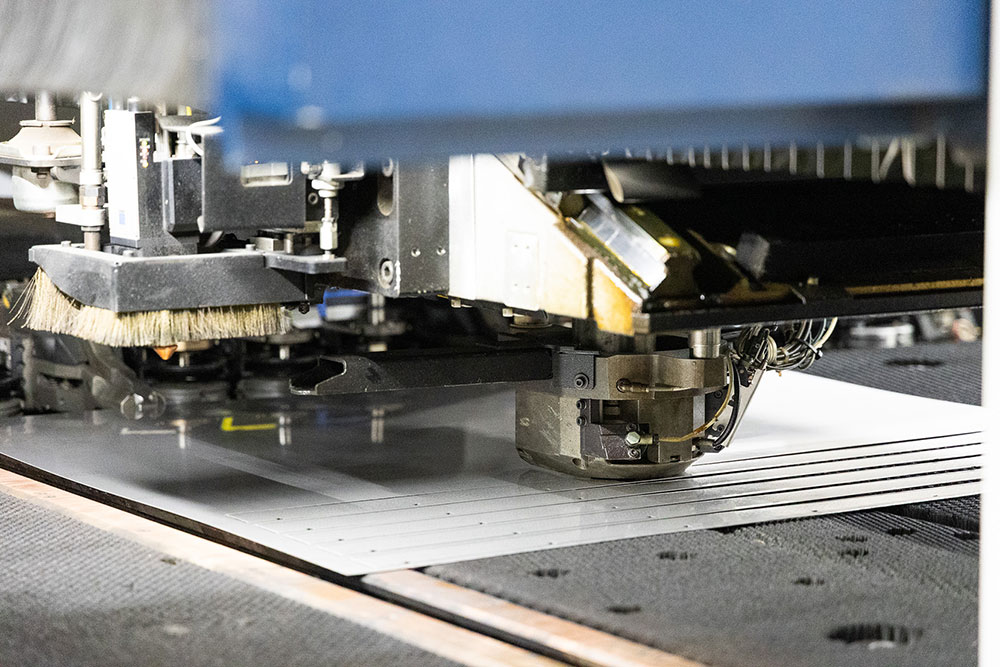
A laser punch machine (also known as a laser/punch combination system) integrates laser cutting and punching into a single sheet metal fabrication platform. Manufacturers can complete both processes in one setup, eliminating the need to move material between separate machines. This combined approach improves part flow, reduces downtime, and strengthens overall production efficiency.
For industries that require high‑precision cutting and fast punching capabilities, the laser punch offers a powerful solution that supports both complex laser cutting geometries and high‑volume punch operations. Rolled Alloys uses this technology to support customers with efficient, repeatable, and cost‑effective metal processing.
The process
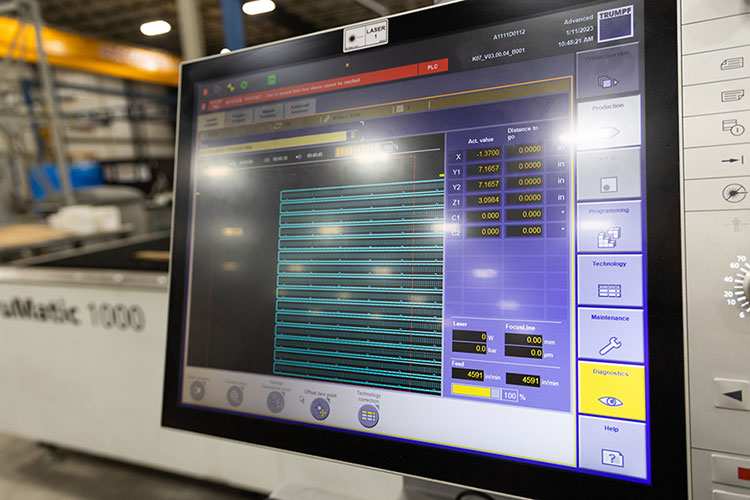
A CNC‑controlled laser punch system alternates between laser cutting and punching operations based on the part geometry.
Laser Cutting Process
A 3,000 kW fiber laser creates high‑accuracy cuts with smooth edges and minimal kerf. The laser excels in producing intricate profiles, detailed contours, and optimized nesting layouts that reduce material waste.
Punching Process
The punch side of the machine delivers up to 18 tons of forming force and features a rail with 20 available tooling stations. Each tooling station can accommodate multi-tools, and the rail offers full 360‑degree tool rotation (a capability not found on all punch machines).
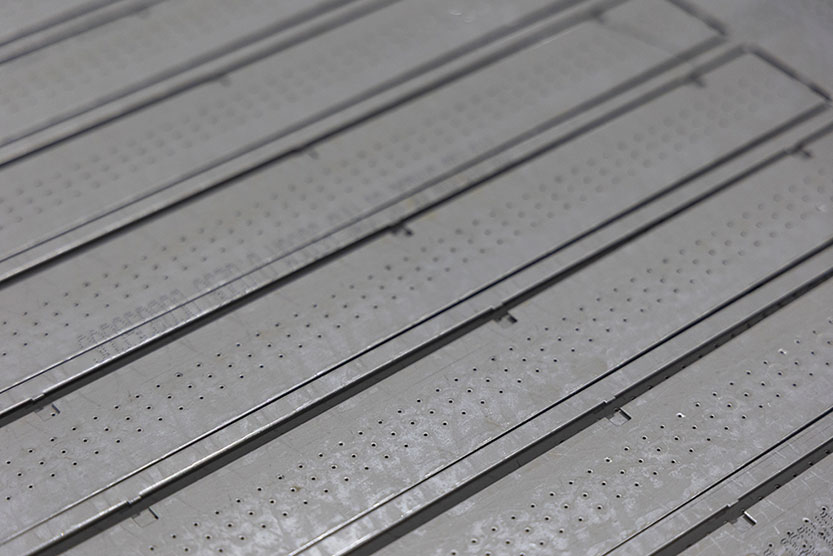
The punch head has a 3‑inch capacity, which defines the maximum punch diameter and the largest workable contour area. This setup enables fast, precise, and repeatable operations such as holes, slots, louvers, extrusions, forms, and embosses.
Because punching is a purely mechanical process, no heat is applied to the material, preserving part integrity, eliminating heat distortion, and ensuring consistent accuracy.
Integrated Workflow
Because both processes run on a single platform, the machine determines the most efficient operation sequence. This shortens cycle time, reduces operator handling, and ensures consistent quality across all finished parts.
key advantages
Improved Efficiency
Laser cutting and punching in one setup reduces:
- Part movement between machines
This results in shorter lead times and lower total processing costs for customers relying on Rolled Alloys for precision-cut blanks.
High Versatility
One machine handles both flat laser‑cut profiles and punched or formed features, making it ideal for industries that need:
- High‑volume metal components
- Prototypes with detailed features
- Complex sheet metal geometries
- Precision parts that combine cut and formed elements
The combination of tool rotation, forming capabilities, and laser cutting flexibility expands the range of parts that can be produced.
Strong Precision and Repeatability
The system delivers:
- +/‑ .004 in. positioning accuracy
- Punch tooling manufactured to +/‑ .002 in, or tighter
- No heat‑affected zones on punched features
This level of control supports applications that require tight tolerances and consistent dimensional stability.
Material and Cost Savings
Laser nesting optimizes sheet usage, while high‑speed punching reduces cost per feature. The combined process minimizes scrap and maximizes throughput for both small‑run and production‑level metal processing.
TOLERANCES AND CAPABILITIES
Machine Performance
- Working area: 50 in. × 120 in.
- Speed: up to 600 hits/min
Tooling Capabilities
- 20 tool stations with multi-tool capability
- Maximum tool size: 3.00 in.
- Forming and bend height up to 1.00 in.
Material Handling
- Minimum sheet thickness: .020–.025 in.
- Maximum sheet thickness: .250 in.
- Maximum sheet weight: 330 lbs.
Punch and Forming Functions
The laser punch supports a wide range of metal processing operations, including:
- Complex patterned punching
These capabilities allow Rolled Alloys to deliver high‑precision metal components with both laser‑cut accuracy and punched‑feature strength.
Processing Services
Let us meet your needs!
With multiple types of processing, we have exactly what you are looking for! Look through our list of processing capabilities or chat with a sales representative about which processing method would be best suited for your order. Additional value-added processing services are also available.
Select your preferred Processing when Creating a Quote