Home » News & Articles » Plasma or Laser Processing: To Cut or Not to Cut
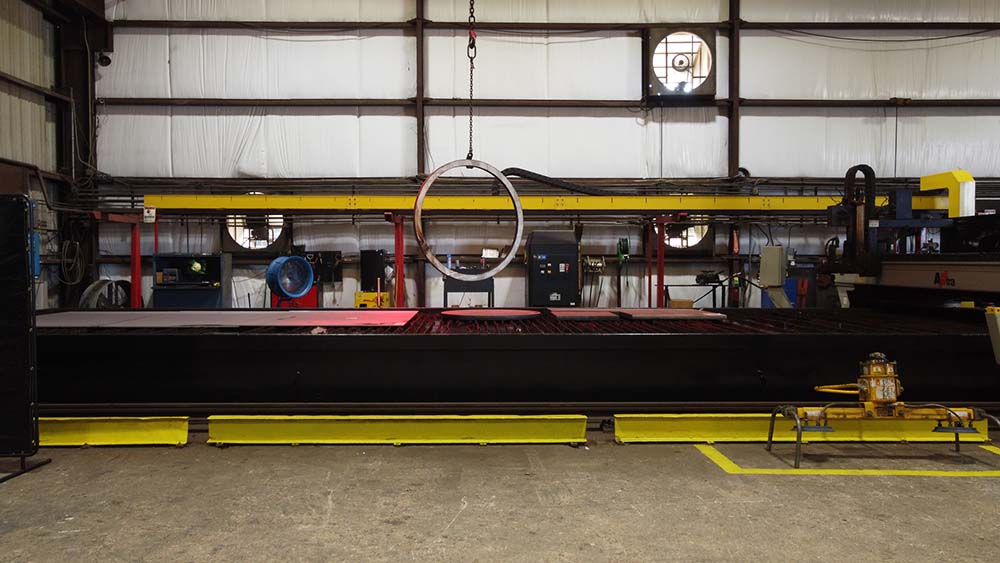
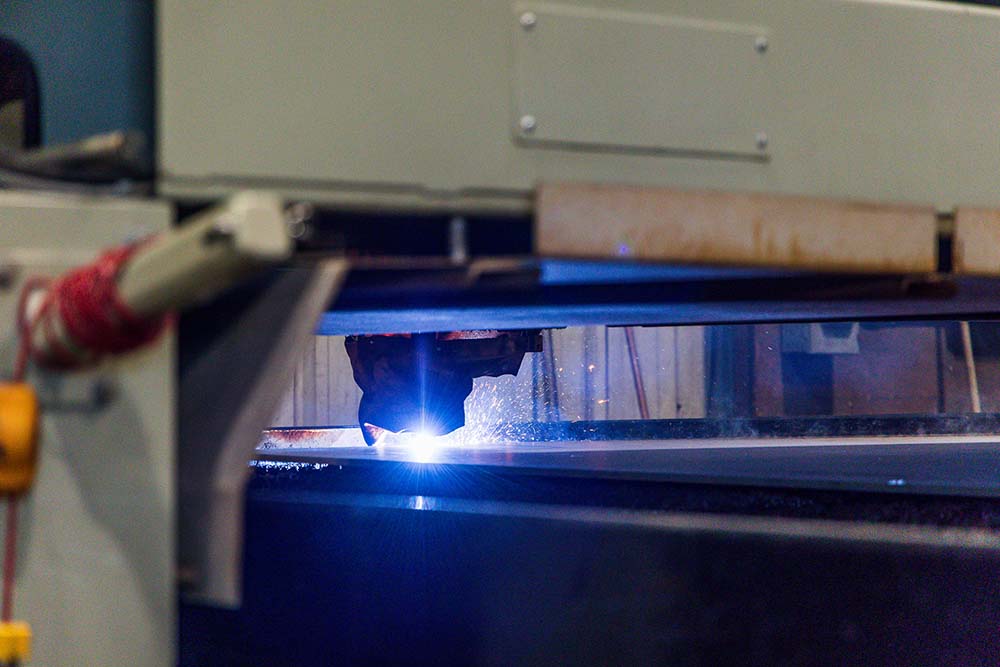
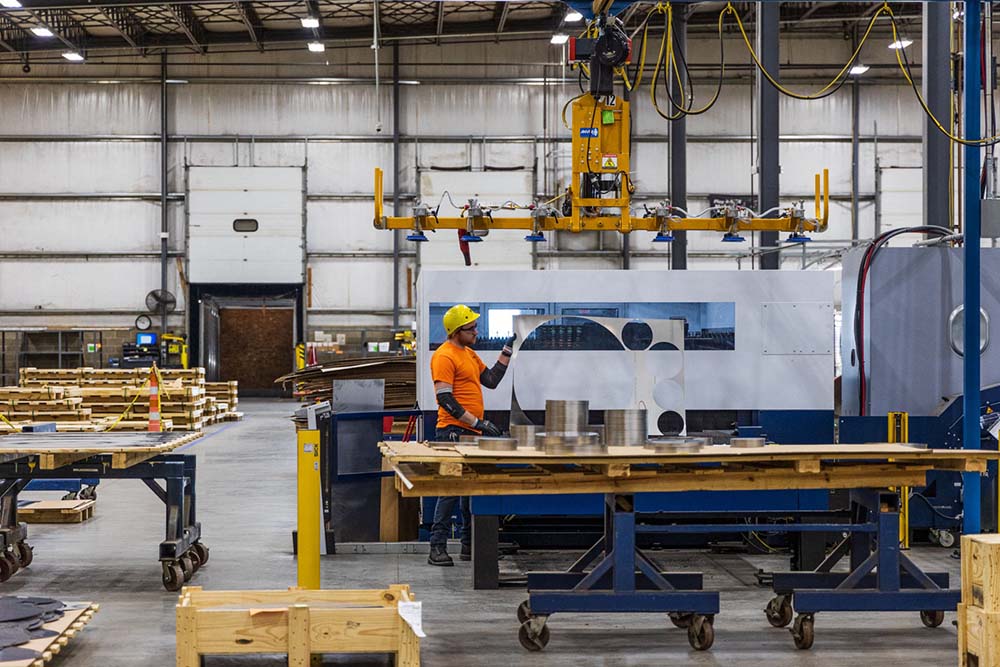
Plasma and laser cutting are fast, productive industrial processes for cutting metal parts.
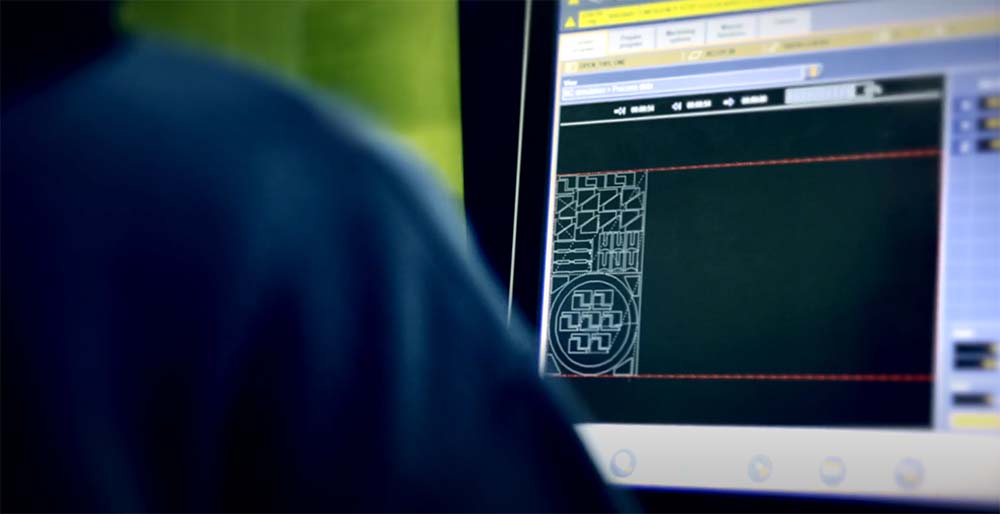
These state-of-the-art machines use high-powered directional beams, capable of scaling up from a computer-generated template while tracing a pattern being simultaneously cut. When the process begins, the area that is being cut will reach a temperature hot enough that it becomes molten.
The high-pressure gas supplied by the laser or plasma then forces the material down within the seam, thus severing the material. As a result, there is a resolidified region at the cut surface with a cast microstructure and a heat-affected zone adjacent to the resolidified region. These two processes are not ideal for cutting certain classes of materials including precipitation hardenable stainless steels (17-4, 15-5), martensitic stainless steels (410, 440c), and duplex stainless steels (2205, 2507).
When using laser or plasma processing on precipitation hardenable materials, the heat from the process is sufficient to melt a spot on the surface. At this point the pressurized gas is turned on. This forces the liquid metal off the piece, thus making the cut. Some of the liquid metal does not get forced away and instead resolidifies. In martensitic and martensitic precipitation hardenable stainless steels, this small region cools fast enough to form an untempered martensitic zone. In the worst-case scenario, this zone can form cracks from internal stresses.
Any attempt at fabrication can lead to propagation of the crack into the base metal. When customers insist on plasma or laser cutting, extra material allowances are added in order to compensate for the potential for cracks. The customer should be advised that the plasma or laser cutting edges need to be ground smooth to remove any potential for cracking.
This extra allowance sometimes is not sufficient: cracks sometimes propagate past the extra material. One potential solution to this cracking issue is to age harden the material from a softer condition immediately or soon after cutting, perform all fabrication and then reheat treat the entire fabrication. A better solution is to instead water jet cut since this technique does NOT form any liquid phase.
In the case of processing duplex via the laser or plasma, the chemical inhomogeneity of duplex materials will need to be addressed. With laser processing you can remove some of the Chromium, while oxidizing away the Molybdenum and Nitrogen found in the material. This results in lowering the P.R.E.N. to the point that it will not have the resistance of the base metal. Duplex is also subject to rust or pitting, as well as contamination due to chemical variations leading to more segregation within the microstructure. If these materials are kept at high temperature (°F) for an extended period, depending on the transformation kinetics you could end up developing sigma phase within an hour of reaching the desired temperature.
As a means of processing, laser and plasma continue to grow in popularity in the specialty alloy market. Their increasing popularity, supports them being repeatedly implemented to increase precision & quality, reducing the time it takes to create, process, and package each part. Industrial processing technology is also advancing, becoming further refined where laser and, plasma cutting is being adapted to a wider range of applications.
With these advancements in technology, coupled with technical expertise, we are able to achieve tighter tolerances in some of the most demanding applications in the industry. With tolerances ranging from +/- .008 to +/- .060 on the laser, and +.125-0, and +.250-0 on the plasma, you are able to process designs and shapes that would have proven far too intricate in the past.
Either laser or plasma processing methods should be of consideration when processing common stainless steels, and nickel alloys like 304, 316, 309, and 310. When considering material that could be impacted by a heat effected zone, or quality of the cut edge is of greater importance, you should consider processing precipitation hardenable, martensitic, and duplex stainless steels with either the abrasive saw or the water jet.

The Value of Cut Part Inspection
Modern metal fabrication demands fast, accurate cut metal inspection to keep up with high-volume production and tight tolerances

RA 253 MA® vs 309/310
Comparing RA 253 MA® and 309/310: Performance, Durability, and Applications

5-Axis Waterjet Beveling
A 5-axis waterjet cutting machine is an advanced CNC cutting tool that uses a high-pressure stream of water mixed with abrasive (usually garnet) to cut
Never Miss an Update - Subscribe Today!
Get application insights, material guides, and technical answers straight from the leaders in high-performance alloys.
Share:
QUOTE, BUY, TRACK
We make it easy to get instant pricing and purchase your metal at the click of a button. Track your order progress, get notified when it ships, and follow your shipment online until it’s delivered. It’s that easy!
Latest Articles
The Value of Cut Part Inspection
Modern metal fabrication demands fast, accurate cut metal inspection to keep up with high-volume production and tight tolerances
RA 253 MA® vs 309/310
Comparing RA 253 MA® and 309/310: Performance, Durability, and Applications
5-Axis Waterjet Beveling
A 5-axis waterjet cutting machine is an advanced CNC cutting tool that uses a high-pressure stream of water mixed with abrasive (usually garnet) to cut through metals and other materials.
AL-6XN Case Study
AL-6XN® Case Study AL-6XN® Resisted corrosive environments at indianapolis power and light for over 5 years Specifications UNS: N08367 ASTM: B 688, A
A Smarter Way to Order Metal Online
Introducing updates to the Rolled Alloys eCommerce experience designed for speed, clarity, and control.