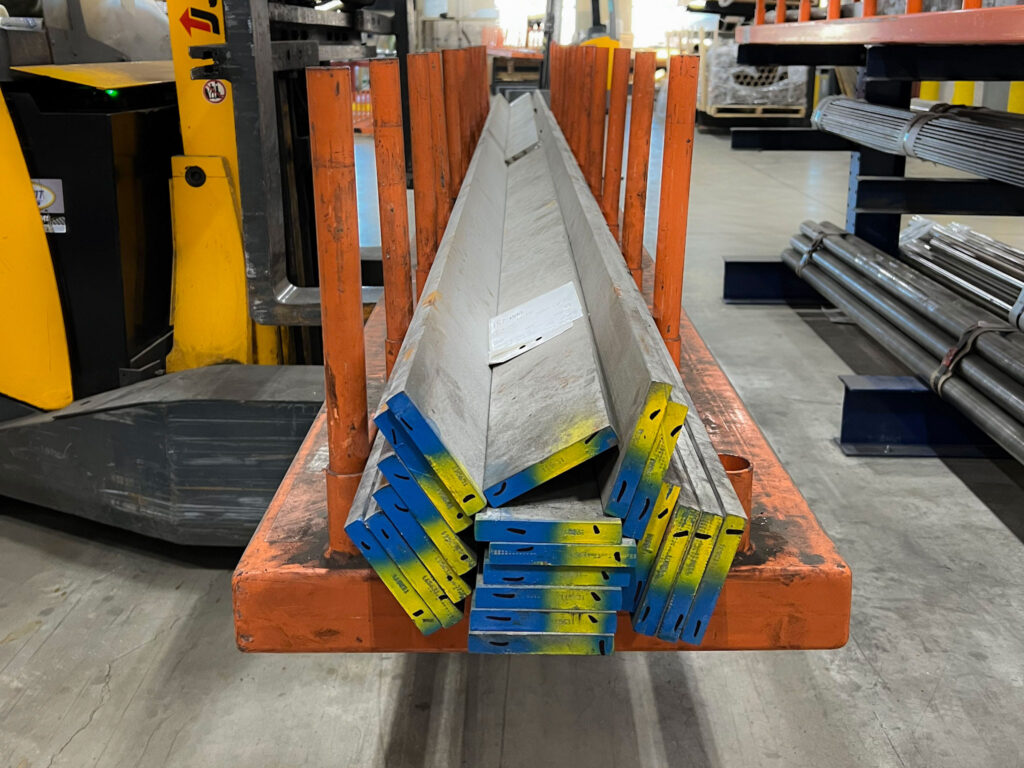
Flat Bar or Gauered Flat Bar from Plate

Off-the-shelf structural shapes are typically available in 304 and 316 stainless steel. Common extruded shapes such as angles, tees, and I-beams, as well as flat bar sizes, can be found. 

17-4-flat-bar-rolled-alloys
abrasive-saw-cutting-rolled-alloys

However, when it comes to specialty alloys, the market demand for such products is low enough that manufacturers rarely produce structural shapes for standard inventory. Limited quantities of flat or square bar are produced in a small number of alloys that are in demand for aerospace applications or where cutting from plate is prohibited. These alloys include titanium alloys and some PH stainless steels.

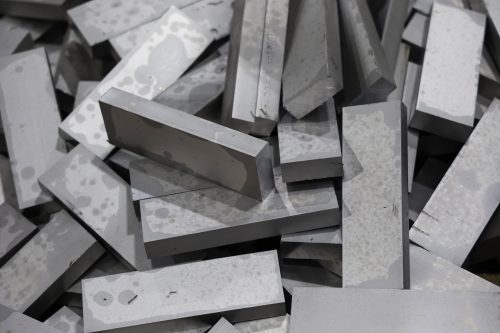
Flat bar production for most other stainless and nickel alloy grades is usually done only when there is a considerable demand to justify a mill production run. This run typically requires a minimum of 2500 pounds per size. However, cutting flat bar from plate can fulfill most flat bar needs, and it poses no metallurgical problems as the properties of stainless and nickel alloy plates are nearly isotropic. Although the transverse mechanical properties can be slightly lower than those in the longitudinal direction, the minimum tensile properties established for each plate material are set by testing in the transverse direction.

The main difference between a true flat bar and a flat bar cut from plate is the dimensional tolerance. In true flat bar, the width and thickness tolerances are strict and similar to those set for round bar. On the other hand, the width tolerance for cutting bar from plate is more liberal and in line with the cutting method, usually with a permitted range of variation of 1/8″. The thickness of the flat bar cut from plate is the same as that of the plate, which has tolerances skewed to the heavy side. The minimum under tolerance for plate thickness is 0.010″. However, the over tolerance is either unrestricted or is at least 0.090″ and increases with thickness.

It is important to note that when it comes to bar, edge and corner conditions can vary. For a true bar, all four sides will have a similar surface finish, whereas corners will be full and almost sharp, with only a slight break. They will also be free of any twist or camber. On the other hand, if a flat bar is cut from plate, the sides that were cut will have a different surface finish from the top and bottom, which are the original plate surfaces. Additionally, bar stripped from plate may show some twist or camber, which can vary significantly depending on the cutting method used.

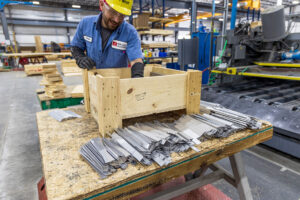
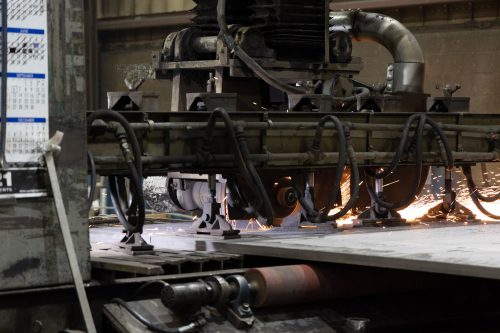
Since most flat bar is cut from plate and can be deformed, at Rolled Alloys, we use a process called Gauering to straighten and condition flat bar products. The equipment used in this process is called a Gauer, named after the New Jersey based company, Gauer Metal Products, where the equipment was invented. Gauering involves passing the flat bar through the Gauer to straighten it, remove any twists, and condition the corners to ensure uniformity. This process also removes the shear burr from the corners. Flat bar cut from plate to ASTM A276 and A479 is permitted by ASTM A484.

AL-6XN® Case Study

Coal-fired power plants generate flue gas as a byproduct of combustion. In many modern plants, especially those burning coal with high sulfur and chloride content,

READ MORE
Nickel Alloys

RA 253 MA® vs 309/310

The main difference between RA 253 MA and both 309 and 310 stainless steel lies in alloy composition and resulting high‑temperature performance. RA 253 MA

READ MORE
5-axis waterjet bevel cutting examples, including tapered and angled edges, precision holes, and clean cuts on metal parts.

5-Axis Waterjet Beveling

A 5-axis waterjet cutting machine is an advanced CNC cutting tool that uses a high-pressure stream of water mixed with abrasive (usually garnet) to cut

READ MORE
Never Miss an Update - Subscribe Today!
Get application insights, material guides, and technical answers straight from the leaders in high-performance alloys.​

Share:

QUOTE, BUY, TRACK

We make it easy to get instant pricing and purchase your metal at the click of a button. Track your order progress, get notified when it ships, and follow your shipment online until it’s delivered. It’s that easy!

Latest Articles

AL-6XN® Case Study

Coal-fired power plants generate flue gas as a byproduct of combustion. In many modern plants, especially those burning coal with high sulfur and chloride content, this flue gas can become highly corrosive to carbon steel and even conventional stainless steels.

Read More »
RA 253 MA® vs 309/310

The main difference between RA 253 MA and both 309 and 310 stainless steel lies in alloy composition and resulting high‑temperature performance. RA 253 MA contains micro‑alloy additions of cerium, silicon, and nitrogen, which enhance oxidation resistance and creep strength at elevated temperatures. In addition, RA 253 MA has a lower overall nickel and chromium content, making it less susceptible to fluctuations in commodity pricing when compared to 309 and 310 stainless steels.

Read More »
5-Axis Waterjet Beveling

A 5-axis waterjet cutting machine is an advanced CNC cutting tool that uses a high-pressure stream of water mixed with abrasive (usually garnet) to cut through metals and other materials.

Read More »
2026 Trade Show Schedule

Connect with our team in person throughout 2026 at these key industry events. Explore our full trade show schedule to discover where we’ll be exhibiting all year long.

Read More »
Privacy Overview

This website uses cookies so that we can provide you with the best user experience possible. Cookie information is stored in your browser and performs functions such as recognising you when you return to our website and helping our team to understand which sections of the website you find most interesting and useful.