

Home » News & Articles » Plate Thickness Variations
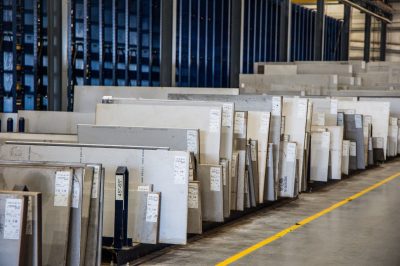
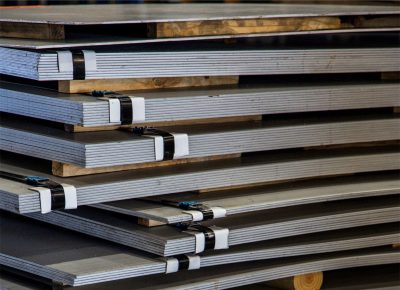
With the increased capability of hot mills to roll heavy coil (up to ½” thick), has come an increased awareness of the thickness variations that can be present in conventional discrete hot rolled plates.
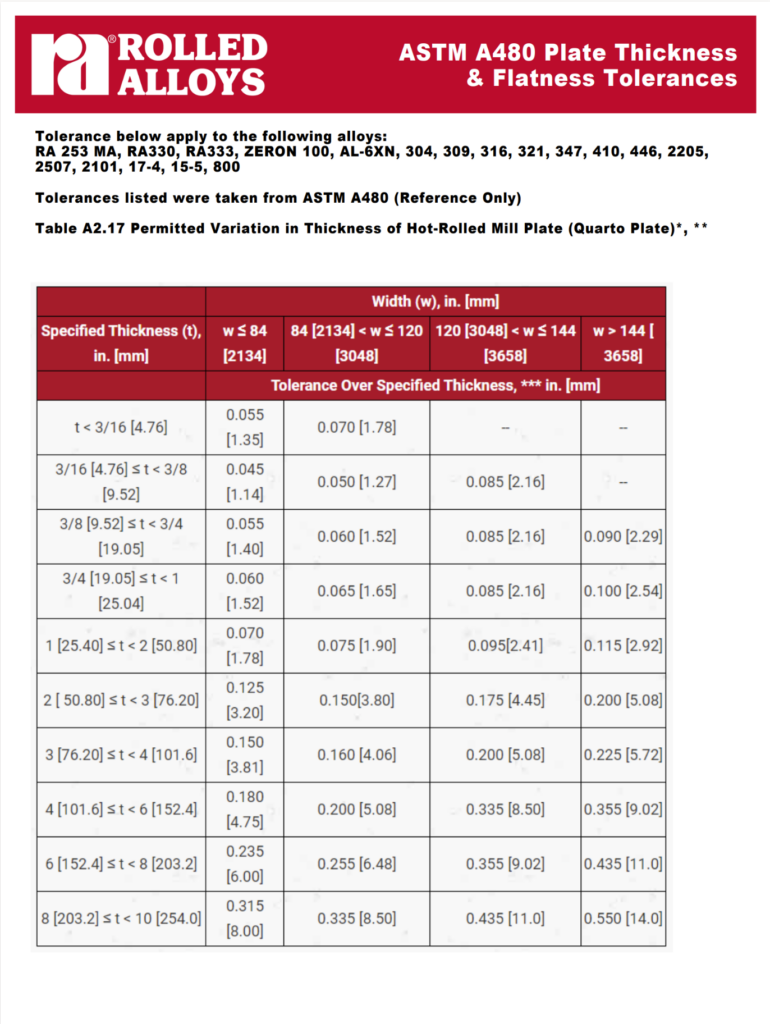
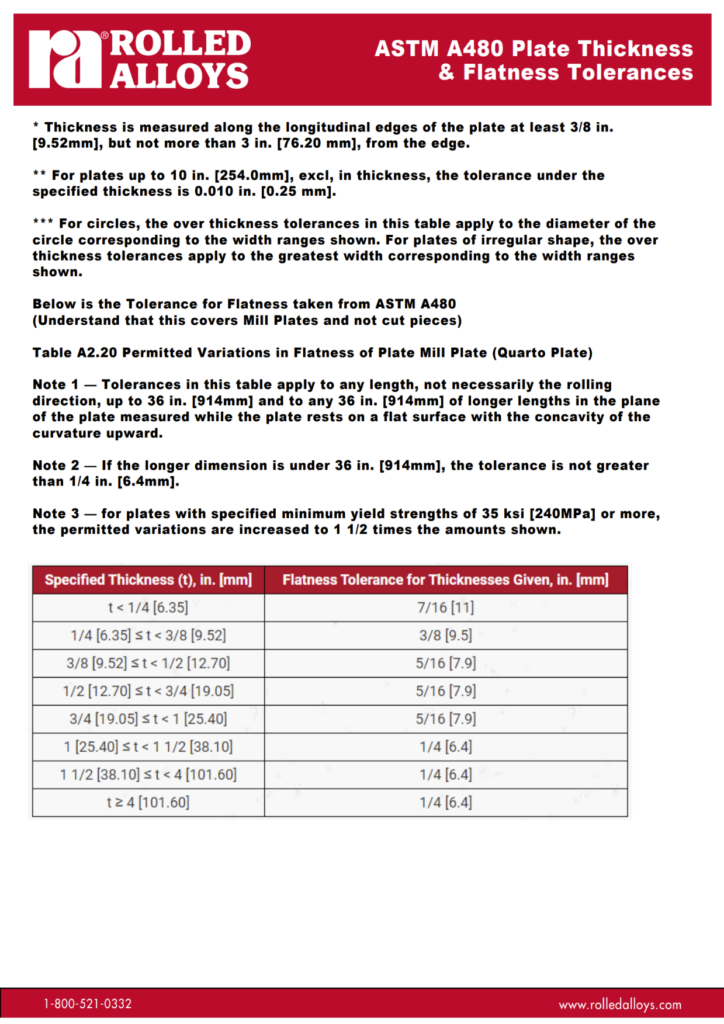
In the past, plate products with a thickness of 3/16″ or more were produced as individual pieces, commonly 96″ wide or even wider in some instances. When these plates are rolled, the rolls can deflect, resulting in a crown shape on the plate where the thickness in the middle is greater than at the edges. The thickness tolerances for these plates are defined in ASTM A480, Table A2.17. The minus tolerance of 0.010″ applies to all thicknesses at all points. However, the plus tolerances differ. The table shows that the listed plus tolerances, for example, 0.050″ on a 96″ wide 1/4″ plate, apply only to the longitudinal edges of the rolled plate as measured at least 3/8″ from the edge and not more than 3″ from the edge. This specification didn’t provide any plus tolerance requirement on the middle of the plate except for 3″ on either edge.
Over time, ASTM revised A480 to include upper limits on thickness greater than 3” away from the longitudinal edge. Once the change to the specification was adopted, lengths greater than 3” away from a longitudinal edge could not exceed twice the tolerance of table A2.17. In the case of the 1/4″ plate mentioned above, while the zone along the original longitudinal edge must meet a 0.050″ maximum, the center of a 1/4″ plate can measure as much as 0.350″. As plate production satisfied these limits, no change in production needed to be made. The standard also notes that the edge thickness tolerances in Table A2.17 apply to as-produced mill plates, not to smaller pieces cut from these plates. The revision to the standard ensures that end users are aware of what the upper limits might be.
Table A2.17
It is generally not a problem for most users to handle a heavier stainless steel plate, and it can even be to their advantage. The pricing of stainless steel plates is typically based on their theoretical weight, area, or per piece, making it independent of thickness variations. In some cases, the extra thickness provided by the crown can offer more stock for a cleanup allowance without requiring the purchase of a heavier gauge. However, plate produced from coil may have less of a crown, making it a disadvantage for machinists. Machine shops that perform machining operations on blocks of material cut from the center of a plate may encounter extra machining due to the heavier thickness at the center. For instance, a 3/8″ thick plate may be as thick as 1/2″ in the center.

AL-6XN® Case Study
Coal-fired power plants generate flue gas as a byproduct of combustion. In many modern plants, especially those burning coal with high sulfur and chloride content,
RA 253 MA® vs 309/310
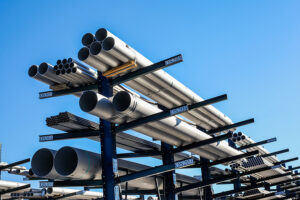
The main difference between RA 253 MA and both 309 and 310 stainless steel lies in alloy composition and resulting high‑temperature performance. RA 253 MA
5-Axis Waterjet Beveling
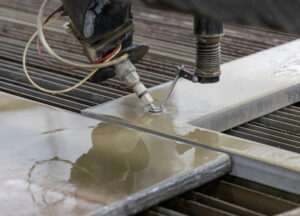
A 5-axis waterjet cutting machine is an advanced CNC cutting tool that uses a high-pressure stream of water mixed with abrasive (usually garnet) to cut

Never Miss an Update - Subscribe Today!
Get application insights, material guides, and technical answers straight from the leaders in high-performance alloys.
Share:
QUOTE, BUY, TRACK
We make it easy to get instant pricing and purchase your metal at the click of a button. Track your order progress, get notified when it ships, and follow your shipment online until it’s delivered. It’s that easy!
Latest Articles
AL-6XN® Case Study
Coal-fired power plants generate flue gas as a byproduct of combustion. In many modern plants, especially those burning coal with high sulfur and chloride content, this flue gas can become highly corrosive to carbon steel and even conventional stainless steels.
RA 253 MA® vs 309/310
The main difference between RA 253 MA and both 309 and 310 stainless steel lies in alloy composition and resulting high‑temperature performance. RA 253 MA contains micro‑alloy additions of cerium, silicon, and nitrogen, which enhance oxidation resistance and creep strength at elevated temperatures. In addition, RA 253 MA has a lower overall nickel and chromium content, making it less susceptible to fluctuations in commodity pricing when compared to 309 and 310 stainless steels.
5-Axis Waterjet Beveling
A 5-axis waterjet cutting machine is an advanced CNC cutting tool that uses a high-pressure stream of water mixed with abrasive (usually garnet) to cut through metals and other materials.

A Smarter Way to Order Metal Online
Introducing updates to the Rolled Alloys eCommerce experience designed for speed, clarity, and control.
2026 Trade Show Schedule
Connect with our team in person throughout 2026 at these key industry events. Explore our full trade show schedule to discover where we’ll be exhibiting all year long.