Titanium is renowned for its strength, exceptional corrosion resistance, and lightweight properties, making it an invaluable material across various sectors, particularly in aerospace, medical, and chemical processing. But how does titanium transition from raw materials like titanium sponge and scrap into usable plates, sheets, and bars? This guide will take you through how scrap and sponge are transformed into a final product.
What is Titanium Sponge and Titanium Scrap?
Titanium sponge serves as the essential raw material for producing high-quality titanium products. This material is generated through the Kroll process, which is a well-established method that reduces titanium tetrachloride to metallic titanium. The result is a spongy, porous structure characterized by its brittleness and low concentration of impurities, including iron and oxygen. Due to its exceptional purity, which can exceed 99%, titanium sponge is particularly well-suited for producing titanium ingots and various alloys.
Titanium scrap consists of a wide range of leftover materials generated during the production and machining of titanium components, including small pieces, turnings, offcuts, and rejected parts. Unlike titanium sponge, titanium scrap typically contains higher levels of impurities, particularly iron and oxygen, which can pose challenges for directly converting it into high-grade titanium ingots. These contaminants can negatively impact the mechanical and corrosion properties of the final product, making advanced refining techniques—such as controlled atmosphere melting or blending with fresh sponge—essential for meeting the stringent requirements of critical applications. Among titanium scrap, the subset known as revert refers to high-value, clean, and fully traceable offcuts from manufacturing that remain suitable for direct remelting into new ingots, enabling efficient closed-loop recycling in industries such as aerospace.
In addition to sponge and scrap, there is an intermediate material known as a master alloy. This is a pre-alloyed metal mixture that serves as an intermediary to introduce controlled amounts of alloying elements into a melt.
The Melting Process: Turning Raw Materials into Titanium Ingots
Vacuum Arc Remelting
In the vacuum arc remelt (VAR) process, a cylindrical consumable electrode—made from titanium sponge, alloying additions, and/or certified revert scrap—is melted by an electric arc in a vacuum chamber. The molten titanium pool solidifies in a water-cooled copper crucible, producing a dense, high-purity ingot.
Electrode preparation is meticulously controlled. Sponge and alloying elements are compressed into compacts or briquettes, which are subsequently welded, typically using Gas Metal Arc Welding (GMAW), to create electrodes up to 15 feet long. Clean, traceable revert titanium may be blended in to reduce costs while still meeting quality standards.
For critical applications, the industry practice typically involves one of two methods: a double consumable-electrode VAR process, where the first melt consolidates the feedstock into a primary ingot and the second melt enhances the chemistry and soundness; or hearth melting followed by VAR.
Hearth Melting
Electron beam melting (EBM) and other hearth melting technologies are primarily used to process high scrap content and produce slab and ingot directly. Hearth melting techniques employ an electron beam or plasma arc to melt material on a separate, refractory-less hearth before the molten metal flows into a slab or ingot mold. This process produces slabs and ingots with uniform composition and near-complete elimination of high-density inclusions, making it especially effective for unalloyed and low-alloy titanium grades. While these methods enable efficient scrap utilization, continuous alloy addition, and direct slab and ingot production, aerospace-grade titanium still requires VAR as the final melt stage to meet quality requirements.
Hearth melting offers several advantages in efficiency and quality compared to VAR. One key benefit is the deep settling pool in the hearth, which effectively removes high- and low-density tramp materials, such as tungsten from welding residues, before the melt enters the ingot mold. Additionally, the continuous addition of sponge, scrap, or master alloys allows for real-time adjustments to the chemical composition, ensuring consistent product quality in a single melting operation. By producing rectangular slabs weighing between 40,000 and 50,000 pounds, manufacturers can deliver the material directly to the hot rolling mill, eliminating the need for breakdown steps, reheating cycles, and additional surface conditioning. As a result, overall productivity is significantly enhanced while material and energy costs are reduced.
From Ingot or Slab to Final Product
Forging and Shaping
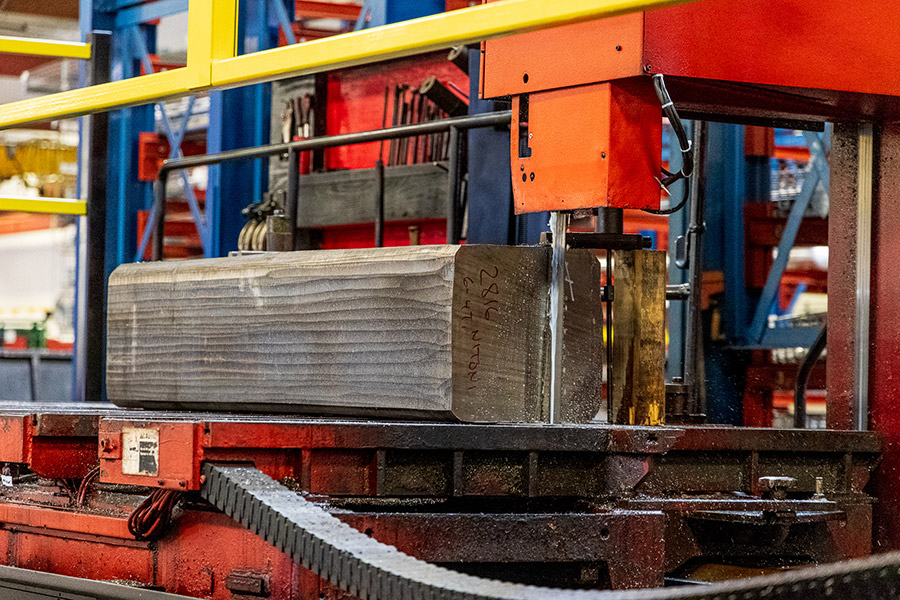
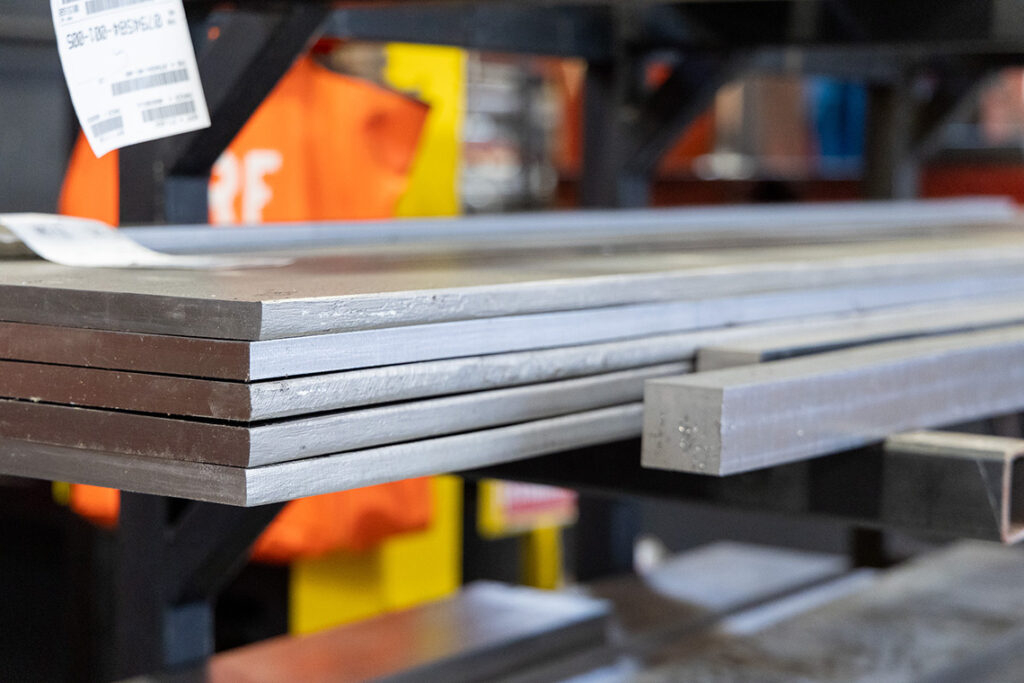
Transforming semi-finished forms into finished titanium components involves forming and shaping methods adapted from specialty steel manufacturing, while also being optimized for titanium’s unique metallurgical properties. Forging is used to produce slabs, bars, and open-die shapes such as rings, shafts, and disks. Rolling is utilized to convert slabs into coils, sheets, and plates. Bars can be prepared for near-net-shape die forging or drawn into wire and filaments. Extrusion allows for the creation of complex profiles, and tube fabrication is achieved through techniques such as cross-rolling or pilgering of pierced blanks.
Finishing
After final heat treatment, such as annealing or aging, titanium and its alloys often form a surface oxide layer known as alpha-case. This occurs due to the metal’s high reactivity at elevated temperatures, especially in the absence of a high-vacuum or inert atmosphere. The oxidized layer is typically brittle and contaminated with elements like oxygen and nitrogen, which negatively impact the material’s fatigue resistance and ductility. Therefore, removing this surface oxide layer is a crucial finishing step. Common finishing operations for titanium include:
- Pickling (acid etching)
- Chemical milling
- Abrasive blasting (such as sandblasting)
- Machining (precision grinding or turning)
These processes remove the oxide film and a controlled depth of base metal beneath to eliminate any embrittled zones. Specifications often dictate minimum removal depths to ensure complete elimination of the affected layer.
References
Leyens, C., & Peters, M. (Eds.). (2003). Titanium and Titanium Alloys: Fundamentals and Applications. Wiley-VCH.
Banker, J., Frey, D., McMaster, J., Moser, K., Sutherlin, R., & Wells, H. (2021). Best Practices for Reactive and Refractory Metals in the CPI (1st ed.). MTI (Materials Technology Institute)
Donachie, M. J. Jr. (2000). Titanium: A Technical Guide (2nd ed.). ASM International.