Home » News & Articles » 17-4 PH vs. 15-5 PH vs. 13-8 PH Stainless Steel
17-4 PH vs. 15-5 PH vs. 13-8 PH Stainless Steel: Similarities, Differences, and Applications
When selecting a high-strength stainless steel for demanding engineering applications, three precipitation-hardening grades frequently rise to the top: 17-4 PH,15-5 PH, and 13-8 PH. These martensitic age-hardenable alloys offer high strength, corrosion resistance, and versatile mechanical properties, making them valuable across a range of industries.
While these grades share several important characteristics, differences in composition, processing methods, mechanical performance, and cost can influence material selection. This article examines the key similarities and differences among 17-4 PH,15-5 PH, and 13-8 PH, as well as fabrication considerations and typical applications.
What Do 17-4 PH, 15-5 PH, and 13-8 PH Have in Common?
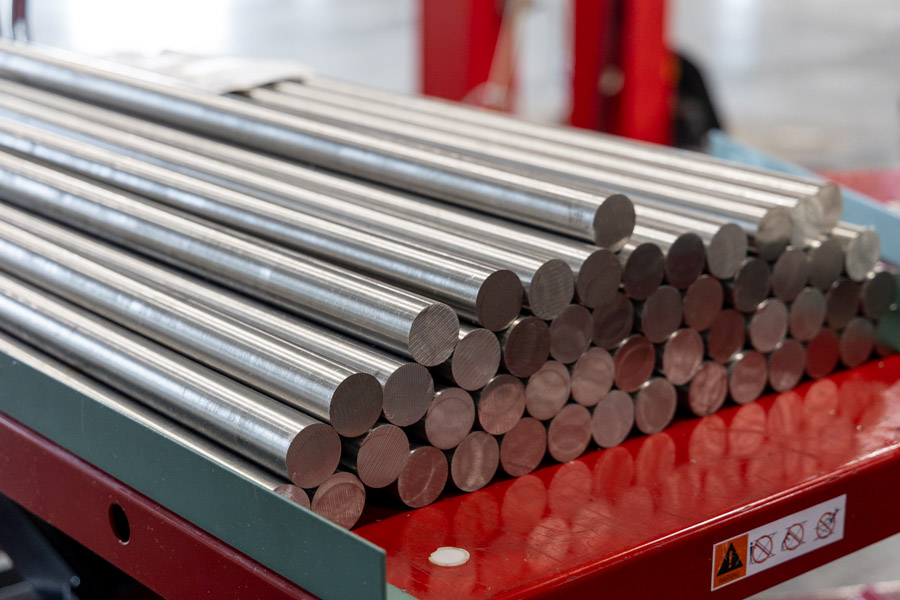
17-4 PH, 15-5 PH, and 13-8 PH are all iron-based stainless steels classified as martensitic age-hardenable grades. Unlike 400 series stainless steels, which achieve strength through quenching and tempering, these alloys are strengthened through an aging process. During aging, the material is held at a specific elevated temperature for a designated period, allowing precipitates to form within the microstructure, which heavily influence mechanical properties.
Typical supplied condition
These materials are typically supplied in the annealed condition, commonly identified as Condition A on material test certificates. This condition allows for subsequent aging treatments to achieve the desired mechanical characteristics, catering to a wide range of needs. Other commonly available aged conditions include 17-4 H1075, 17-4 H1150, and 15-5 H1025.
Significance of How PH Grades Are Named
These alloys follow a consistent naming convention in which the first number represents chromium content, while the second represents nickel content. For example, 17-4 contains 17% chromium and 4% nickel.
Cutting Considerations
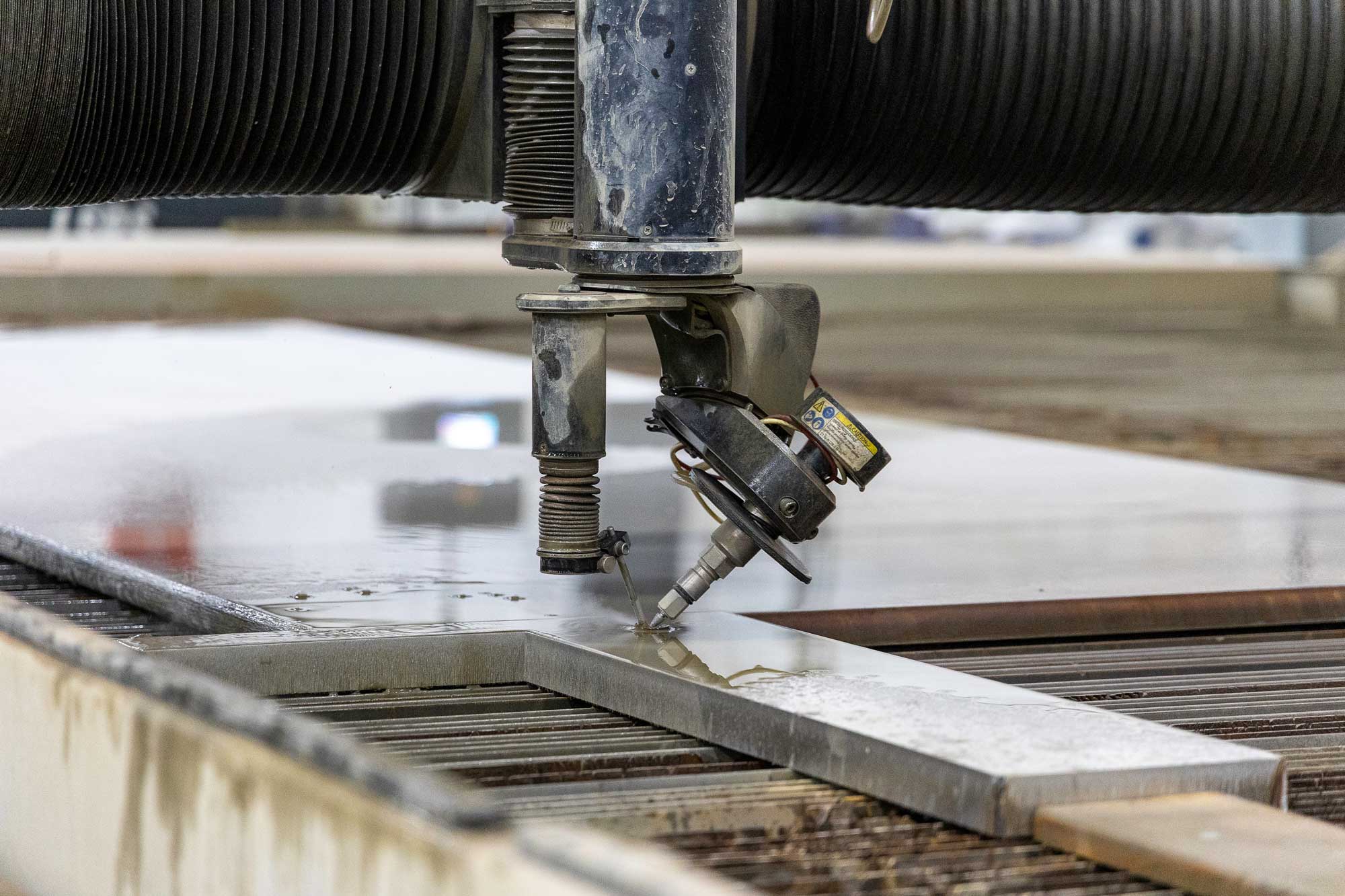
One important consideration when using these alloys is the selection of the cutting method. Due to the potential for untempered martensite to form at cut edges, thermal cutting is not recommended for these grades. Instead, cold-cutting methods should be used, including:
• Bar saw cutting
• Waterjet cutting
• Band saw cutting
• Shearing
These methods help reduce brittleness and minimize the risk of fractures.
Fabrication and Weldability
When evaluated under similar conditions, all three alloys exhibit comparable machinability. Their fabrication and weldability characteristics are also broadly similar. However, welding can create localized variations in mechanical properties, potentially making post-weld heat treatment necessary to obtain desired performance.
What are the differences between 17-4 PH, 15-5 PH, and 13-8 PH Stainless Steel?
Precipitation Strengthening Mechanisms
The primary strengthening mechanism during aging differs between the grades.
• 17-4 PH and 15-5 PH develop copper-rich precipitates within the martensitic matrix.
• 13-8 PH uses aluminum rather than copper, forming nickel-aluminum precipitates.
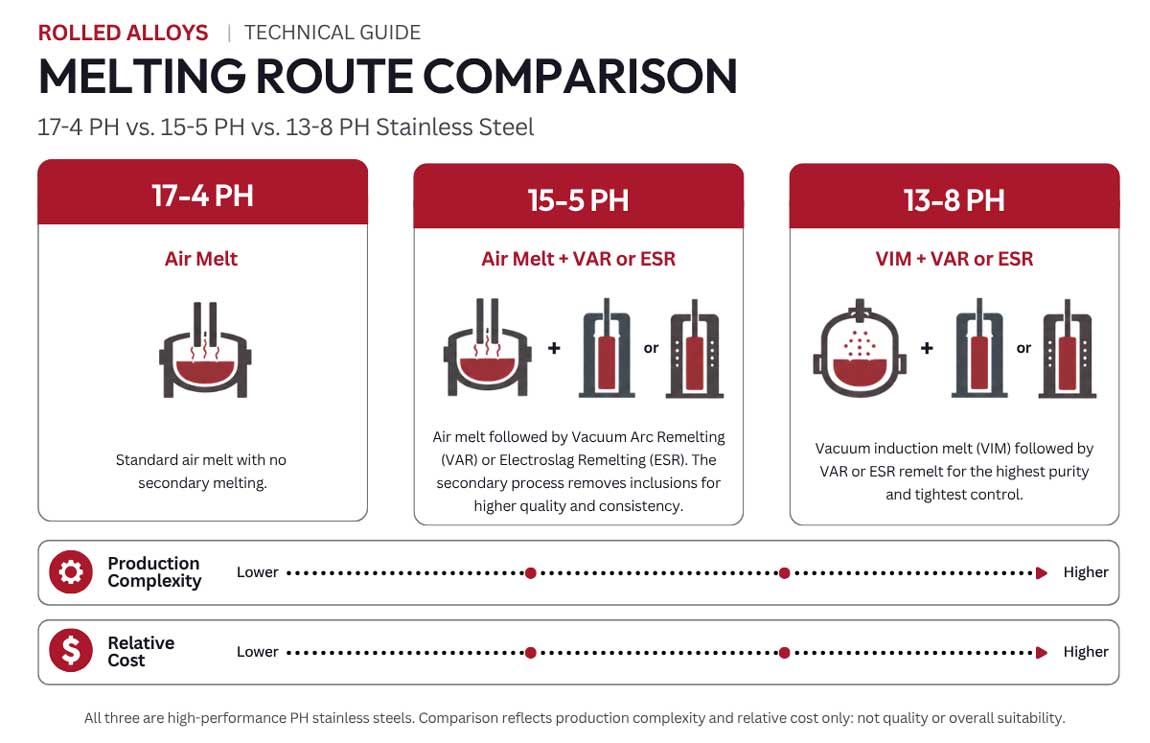
Melting and Production Processes and Cost Considerations
The melting routes vary significantly among the three grades:
Application Scope
Application requirements often determine which alloy is selected.
17-4 PH is commonly used in less critical and industrial applications.
15-5 PH and 13-8 PH are typically chosen for more demanding applications that require enhanced material performance.
Enhanced-Machining Option: PRODEC® 17-4
Among these grades, 17-4 PH is unique in offering an enhanced-machining variant.
At Rolled Alloys, PRODEC® 17-4 is stocked to improve productivity and machining efficiency. It supports higher cutting speeds and feeds with reduced tool wear, and meets standard 17-4 PH ASTM, AMS, and ASME specifications.
Dive Deeper into PRODEC® Stainless Steel Bar
Mechanical Properties After Aging
The alloys exhibit a wide range of mechanical property profiles after aging treatments.
13-8 PH tends to provide superior ductility and improved transverse-direction performance.
13-8 PH Stainless Steel Typical Mechanical Properties*
| PROPERTY | A | H950 | H1000 | H1050 | H1100 | H1150 | H1150-M |
|---|---|---|---|---|---|---|---|
| UTS, ksi | 16 0 | 225 | 215 | 190 | 160 | 145 | 130 |
| 0.2% YS, ksi | 12;0 | 210 | 205 | 180 | 150 | 105 | 85 |
| Elongation, % in 2" | - | 12 | 13 | 15 | 18 | 18 | 22 |
| Hardness, Rockell C | 33 | 47 | 45 | 43 | 35 | 35 | 32 |
*Small Diameter Bar Typical Values (1-3″); Data Source: Cleveland-Cliffs.
15-5 PH offers ductility levels that closely follow 13-8 PH.
15-5 PH Stainless Steel Typical Mechanical Properties*
| PROPERTY | A | H900 | H925 | H1025 | H075 | H1150 | H1150-M |
|---|---|---|---|---|---|---|---|
| UTS, ksi | 16;1 | 209 | 181 | 174 | 162 | 150 | 136 |
| 0.2% YS, ksi | 14; 0 | 201 | 175 | 171 | 160 | 140 | 111 |
| Elongation, % in 2" | 8 | 10 | 12 | 12 | 13 | 15 | 19 |
| Hardness, Rockell C | 35 | 46 | 41 | 40 | 38 | 36 | 31 |
*Cold-flattened sheets and strip; Data Source: Cleveland-Cliffs.
17-4 PH generally exhibits lower ductility compared with the other two grades.
17-4 PH Stainless Steel Typical Mechanical Properties*
| PROPERTY | A | H900 | H925 | H1025 | H075 | H1150 | H1150-M |
|---|---|---|---|---|---|---|---|
| UTS, ksi | 16;0 | 210 | 200 | 185 | 175 | 160 | 150 |
| 0.2% YS, ksi | 15; 5 | 200 | 195 | 170 | 165 | 150 | 130 |
| Elongation, % in 2" | 5 | 7 | 8 | 8 | 8 | 11 | 12 |
| Hardness, Rockell C | 35 | 45 | 43 | 38 | 37 | 35 | 33 |
*Cold-flattened sheets and strip; Data Source: Cleveland-Cliffs.
Which PH Stainless Steel Should You Choose?
Selecting between 17-4 PH, 15-5 PH, and 13-8 PH depends on the balance of mechanical properties, ductility, production requirements, machining considerations, and cost required for the application. While all three are precipitation-hardening stainless steels, their differences in melting practice and mechanical performance can influence which grade is the best fit.
| Feature | 17-4 PH | 15-5 PH | 13-8 PH |
|---|---|---|---|
| Primary Hardening Mechanism | Copper-rich precipitates | Copper-rich precipitates | Nickel-Aluminum precipitates |
| Typical Production Method | Air Melt | Air Melt + VAR/ESR | VIM + VAR/ESR |
| Relative Cost | Lowest | Medium | Highest |
| Ductility | Good | Better | Best |
| Typical Application Scope | Industrial, Less Critical Applications | Critical Applications | High-Demanding Applications |
| Common Applications | Industrial equipment, Valves, Pumps, Fasteners, Firearms, Aerospace, Space, and Defense components | Aerospace, Defense, Space, Nuclear components, Fasteners, and high-strength structural applications | Aerospace, Defense, Space, Nuclear components, Fasteners, and high-strength structural applications |
| Enhanced Machining Grade Available | Yes (PRODEC® 17-4) | No | No |
Quote and Order Faster.
Work Smarter.
All in one Dashboard.

17-4 PH vs. 15-5 PH vs. 13-8 PH Stainless Steel
Compare 17-4 PH, 15-5 PH, and 13-8 PH stainless steel in terms of mechanical properties, melting methods, ductility, machinability, cost, and applications.
Cincinnati Rolled Alloys Visitors Guide
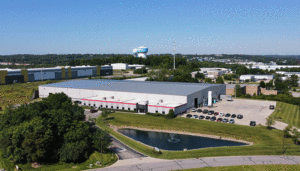
Discover the future of metal processing at our state‑of‑the‑art, 110,000‑square‑foot facility in Cincinnati, Ohio.


Toledo Rolled Alloys Visitors Guide
Discover the future of metal processing at our state‑of‑the‑art, 250,000‑square‑foot facility in Maumee, Ohio.
Never Miss an Update - Subscribe Today!
Get application insights, material guides, and technical answers straight from the leaders in high-performance alloys.
Share:
QUOTE, BUY, TRACK
We make it easy to get instant pricing and purchase your metal at the click of a button. Track your order progress, get notified when it ships, and follow your shipment online until it’s delivered. It’s that easy!
Latest Articles
17-4 PH vs. 15-5 PH vs. 13-8 PH Stainless Steel
Compare 17-4 PH, 15-5 PH, and 13-8 PH stainless steel in terms of mechanical properties, melting methods, ductility, machinability, cost, and applications.
Cincinnati Rolled Alloys Visitors Guide
Discover the future of metal processing at our state‑of‑the‑art, 110,000‑square‑foot facility in Cincinnati, Ohio.
Toledo Rolled Alloys Visitors Guide
Discover the future of metal processing at our state‑of‑the‑art, 250,000‑square‑foot facility in Maumee, Ohio.
Manage Stocking Programs Online | e-Services Enhancement
Manage your eService programs faster with the new dashboard widget from Rolled Alloys. Track inventory, releases, schedules, and recurring material orders in one centralized view.
Precision Laser Punch Cutting Services for Specialty Metals
Precision laser punch cutting services for aerospace, energy, and industrial applications. Rolled Alloys supports complex metal processing with advanced fabrication capabilities.