
Home » News & Articles » Metal Dusting
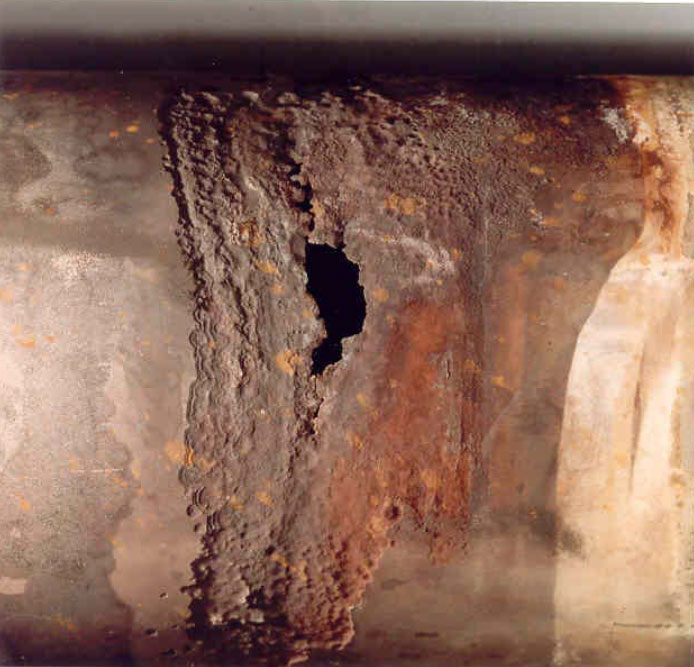
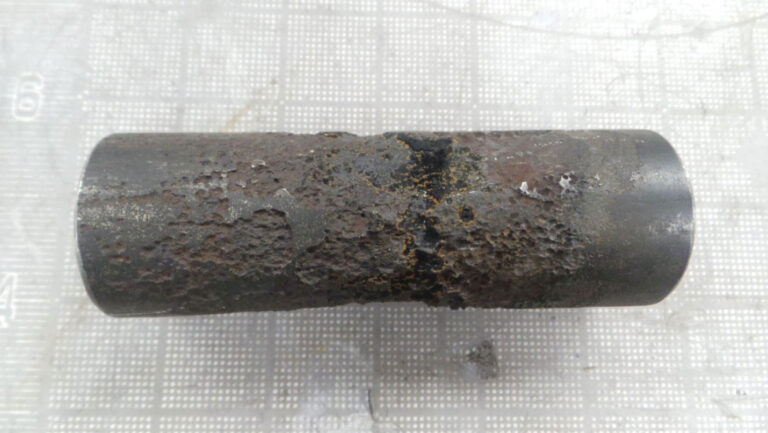
Metal dusting, also known as carbon attack, carbon rot, or catastrophic carburization, is a problem that often occurs in heat-treat carburizing furnaces and in petrochemical equipment.
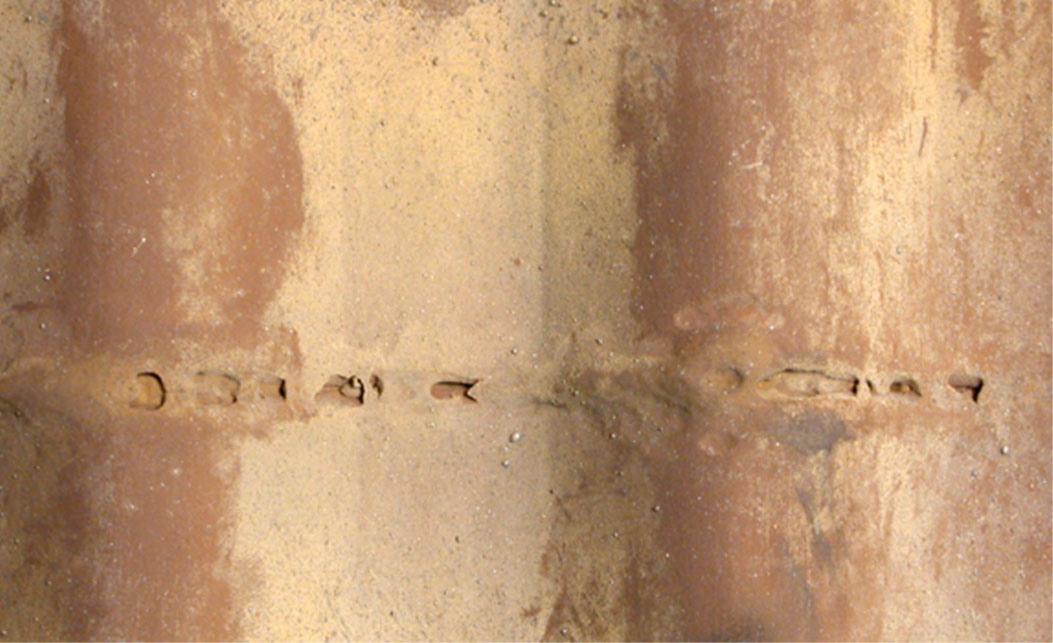
When this phenomenon occurs, the metal undergoes a destructive process that causes it to effectively disappear. What remains are either small, localized areas that appear to have been chewed away or large perforations. There are two temperature ranges in which metal dusting may occur. Typically, an operating temperature between 800 – 1200°F (430 -650°C) is where metal dusting takes place in stagnant areas in or near the furnace walls. A carburizing furnace usually operates at around 1750°F (950°C). However, some lower-temperature locations like alloy tube hangers, atmosphere sampling tubes, or where electrical leads pass through furnace walls where the atmosphere is stagnant, is where metal dusting could potentially occur. Occasionally, a higher temperature metal dusting may occur near 1650 – 1700°F (900 – 930°C), causing the metal to become thin or pitted. The pits at this higher temperature are close to 3/8” (10mm) in diameter in contrast to the roughly 1/8” (3mm) at the lower temperature.
In carburizing furnaces the atmosphere is a rich endothermic environment, with about 39% N2, 19.8% CO, 40% H2, 0.2% H2O, and 0.5% CH4. CO2 is low, about 0.1%. Metal dusting changes from aggravation to a significant economic matter as carbon potential increases to about 1% C or more. Metal dusting attacks have been identified in various industries, including hydrogen plant reformers, ammonia plant waste heat recovery boilers, syngas units, coal gasification reduction furnaces, heat treating furnaces, and direct reduced iron ore plants.
The resistance of an alloy to metal dusting has been linked to its ability to form a protective oxide scale even in low oxygen atmospheres that lead to metal dusting. As a result, alloys high in oxide formers tend to provide the greatest level of metal dusting resistance. Chromium, aluminum, and silicon are the most notable oxide forming elements in heat-resistant alloys. A widely accepted way of ranking the resistance of alloys to metal dusting is by calculating the chromium equivalent of the alloy. Generally, alloys with a chromium equivalent of 25 or greater offer moderate resistance to metal dusting, whereas alloys with greater chromium equivalents exceeding 30 are considered to have excellent resistance to metal dusting. Rolled Alloys offers many alloys that have been used to combat metal dusting such as RA602CA®, RA333®, and 625.

The Value of Cut Part Inspection
Modern metal fabrication demands fast, accurate cut metal inspection to keep up with high-volume production and tight tolerances

RA 253 MA® vs 309/310
Comparing RA 253 MA® and 309/310: Performance, Durability, and Applications

5-Axis Waterjet Beveling
A 5-axis waterjet cutting machine is an advanced CNC cutting tool that uses a high-pressure stream of water mixed with abrasive (usually garnet) to cut
Never Miss an Update - Subscribe Today!
Get application insights, material guides, and technical answers straight from the leaders in high-performance alloys.
Share:
QUOTE, BUY, TRACK
We make it easy to get instant pricing and purchase your metal at the click of a button. Track your order progress, get notified when it ships, and follow your shipment online until it’s delivered. It’s that easy!
Latest Articles
The Value of Cut Part Inspection
Modern metal fabrication demands fast, accurate cut metal inspection to keep up with high-volume production and tight tolerances
RA 253 MA® vs 309/310
Comparing RA 253 MA® and 309/310: Performance, Durability, and Applications
5-Axis Waterjet Beveling
A 5-axis waterjet cutting machine is an advanced CNC cutting tool that uses a high-pressure stream of water mixed with abrasive (usually garnet) to cut through metals and other materials.
AL-6XN Case Study
AL-6XN® Case Study AL-6XN® Resisted corrosive environments at indianapolis power and light for over 5 years Specifications UNS: N08367 ASTM: B 688, A
A Smarter Way to Order Metal Online
Introducing updates to the Rolled Alloys eCommerce experience designed for speed, clarity, and control.