Stress Corrosion Cracking (SCC) is a cracking phenomenon that is crucial to consider when working with specialty alloys.
SCC is often associated with chlorides but can also occur with exposure to caustic and other corrosive media. The most common type of stress corrosion cracking in stainless steels occurs in chloride environments, which will be the focus of this discussion.
Three underlying factors must be present to cause SCC:
1) Stress
2) Aqueous Corrosive Media
3) Elevated Temperature
Stress could be from an external source, such as a pressurized vessel, or an internal source, such as a weldment containing residual stresses. Temperatures typically need to be higher than 120°F for SCC to occur in stainless steel. Under certain conditions, SCC can occur at much lower temperatures.
When we consider chloride-induced SCC in specialty alloys, the nickel content is one of the primary indicators of an alloy’s susceptibility. Below is a diagram called the Copson Curve, which plots an alloy’s nickel content on the x-axis and the probability of succumbing to SCC on the y-axis. This diagram shows that the more nickel in an alloy’s composition, the less susceptible it is to SCC. Additionally, on the far left of the Copson Curve, in the region of alloys containing little nickel, ferritic stainless steels and duplex stainless steels are shown to be far less susceptible to SCC than austenitic stainless steels. The reason for this is the ferrite in their microstructure. Ferrite effectively pins SCC before it can propagate into the base material.
AL-6XN®, with only 25% nickel, appear susceptible to SCC based on plotting the alloy on the Copson Curve. In actuality, AL-6XN offers good resistance to SCC. Reasoning for this is its molybdenum content. Like nickel, a higher molybdenum content increases an alloy’s resistance to SCC.
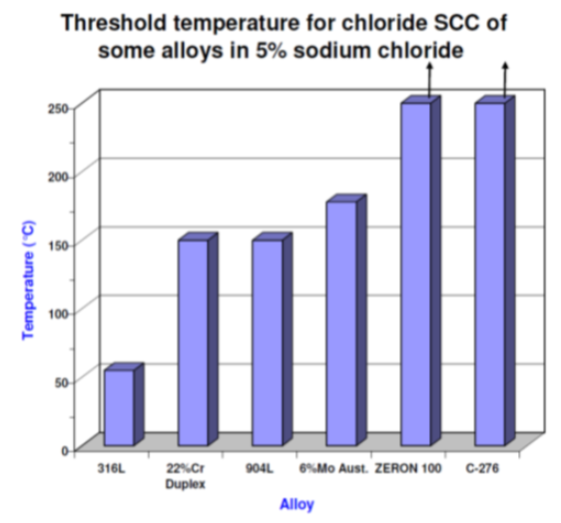
Another way to look at an alloy’s performance to SCC is to consider the threshold temperature at which SCC begins. The below figure shows threshold temperatures for some alloys when exposed to a 5% sodium chloride solution.
Generally, 316/316L should not be used when chloride concentrations exceed 1,000 ppm. In non-acidic environments, 2205 can tolerate chloride levels as high as 8,000 – 10,000 ppm. Super duplex materials, such as Zeron® 100 and 2507, and super austenitic alloys like AL-6XN®, can be used in environments containing up to 50,000 ppm chlorides. Super duplex and super austenitic stainless steels are considered virtually immune to chloride stress cracking.
One note of caution: Chlorides can become easily concentrated. Chloride concentration will rapidly increase when the solvent liquid can evaporate. A few hundred ppm of chlorides can increase to several thousand. A few thousand ppm of chlorides can increase to several tens of thousands. When measuring chlorides, measure those in the system as it operates, not the concentration in the incoming fluids.
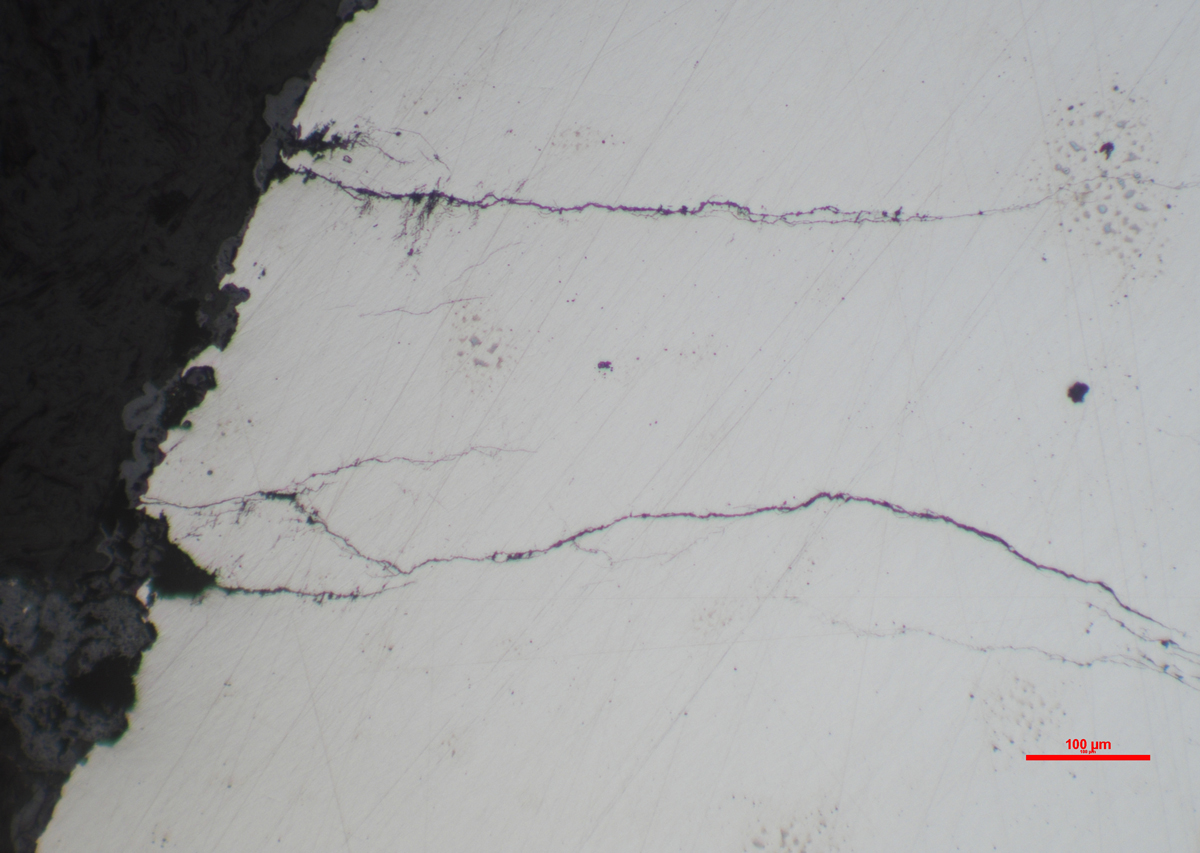
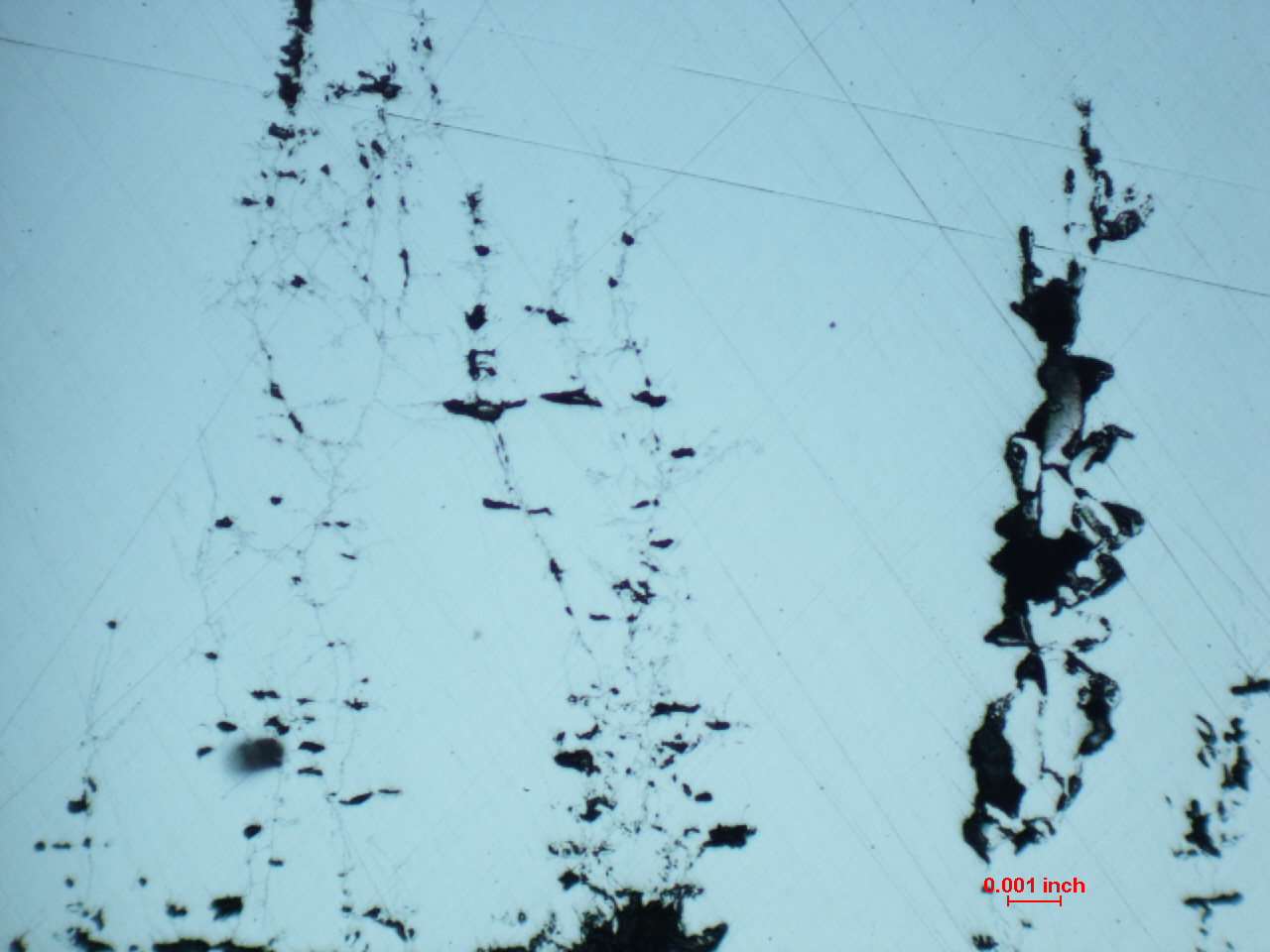
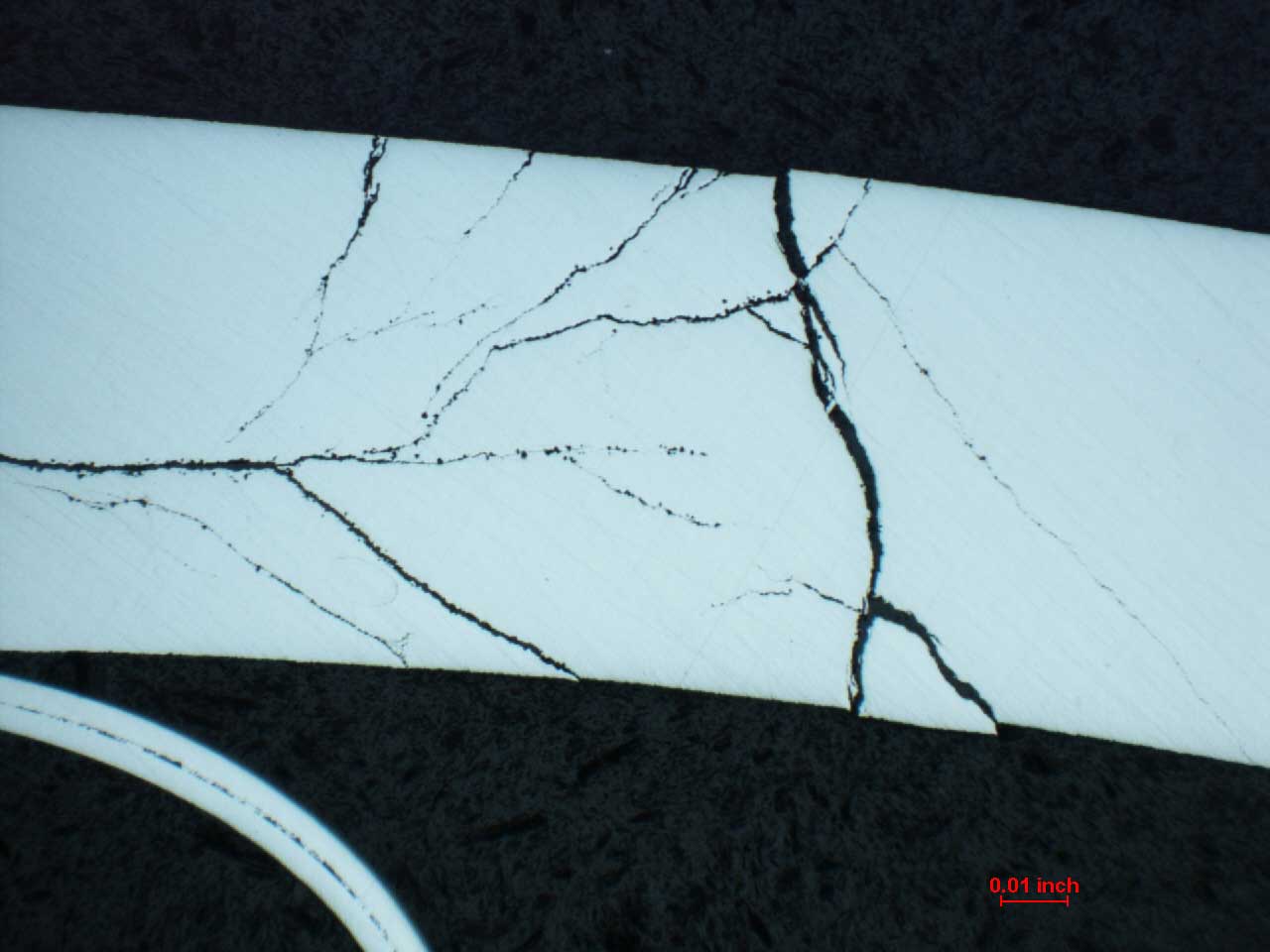
The following are macro and micro examples of typical SCC appearance.